
In Morocco, many businesses have a logo — but very few have a genuine visual identity. The difference is fundamental. A logo is a graphic symbol. A visual identity is a coherent system that communicates who you are, what you do, and why you’re different — on your website, social media, commercial documents, premises, and every touchpoint with your clients.
In 2026, in an increasingly competitive Moroccan market, visual identity is no longer reserved for large companies. SMEs, startups, professional firms, and retailers that invest in a coherent and professional identity generate more trust, justify higher prices, and build lasting recognition — while competitors without a strong identity fight solely on price.
This guide explains what a visual identity really is, why it’s strategic for Moroccan businesses in 2026, what it costs, and how to choose the right provider for a branding project that generates real commercial results.
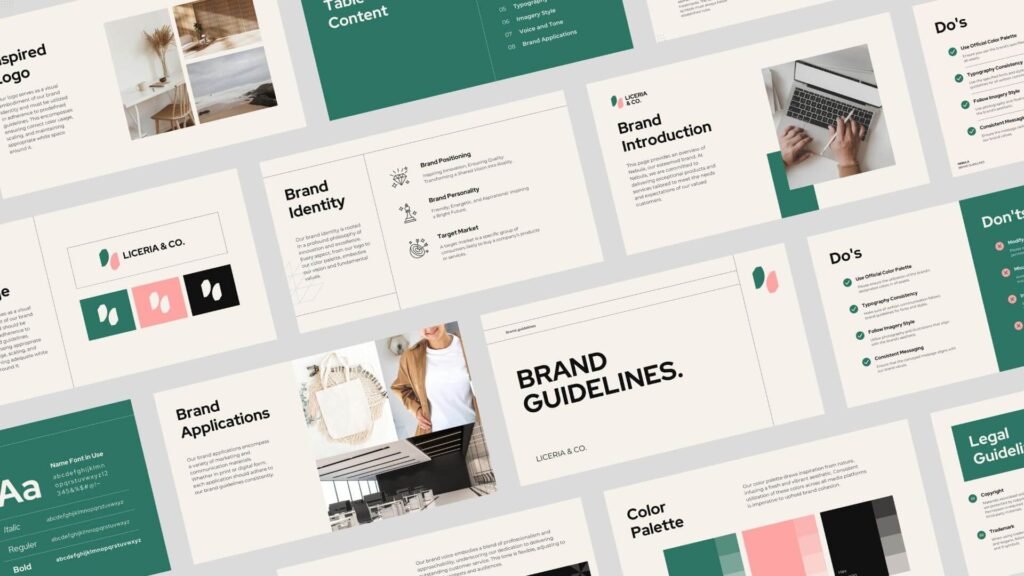
This is the most widespread confusion in the branding world in Morocco. Here’s the essential distinction:
Why the distinction matters: a business that orders “a logo” for 500 MAD from a freelance designer gets a PNG file. A business that invests in a complete visual identity gets a coherent system that can be applied by anyone — internally or externally — consistently across all materials.
A professional logo isn’t a single file — it’s a system of variants adapted to each use:
Mandatory delivery formats: SVG (vector, infinitely scalable), transparent PNG (for documents), vector PDF (for printing). A logo delivered only in JPG or low-resolution PNG is not a professional logo.
Colors are not an arbitrary aesthetic choice — they communicate values and trigger specific emotions. A professional palette includes:
Mandatory technical specifications: each color must be defined in HEX (web), RGB (screen), CMYK (printing), and Pantone (premium printing). A palette delivered only with approximate color names (“navy blue”) is not professionally usable.
Typefaces have a personality — they communicate seriousness, modernity, creativity, or accessibility just as clearly as colors. A professional typographic system includes:
Selection criteria: mobile readability, availability in Google Fonts (for web) or license purchase, variants (Regular, Bold, Italic, Light), compatibility with Arabic script if your brand communicates in Arabic.
Beyond the logo, a strong visual identity includes:
The photos you use in your communication must be consistent with your visual identity. A photographic brief defines:
The brand guidelines document formalizes all these rules — the “constitution” of your visual identity. It allows anyone (external designer, internal marketing team, communications agency) to use your identity correctly without needing your approval for every decision.
What professional brand guidelines must contain:
When a prospect visits your website, LinkedIn profile, or Instagram page, they form an opinion about your professionalism in under 50 milliseconds — before reading a single word. A coherent and professional visual identity instantly communicates:
This is the most concrete commercial impact of branding. Two consultants with identical skills — one with a Canva-made logo and inconsistent materials, the other with a professional visual identity — don’t charge the same prices. A professional visual identity creates a perception of superior value that justifies higher fees.
In 2026, a Moroccan business is present on many channels simultaneously — website, Instagram, LinkedIn, TikTok, WhatsApp Business, commercial documents, business cards, vehicles, premises. Without a codified visual identity, each channel looks different — which fragments brand perception and dilutes memorability.
A visually recognizable brand is remembered more easily. Marketing studies show that a distinctive color increases brand recognition by 80%. In Morocco, in sectors where recommendations play a major role, being memorable is a direct commercial advantage.
A good branding project starts by understanding who you are, who your clients are, and what differentiates you from competitors. This phase includes:
Based on the defined positioning, the designer explores several creative directions:
One direction is chosen and refined:
The identity is applied to main materials and documented:
The classic mistake: creating a website first, then deciding to work on the visual identity 6 months later. Result: the site has to be partially rebuilt to integrate the new identity — additional cost and unnecessary delays.
The optimal sequence:
At AzulWeb, we offer both services integrated — ensuring total consistency between visual identity and website, optimized timelines, and a single point of contact for the entire project.
To see how a strong visual identity integrates with a high-performing website: website creation in Morocco .
| Service Type | Budget | What’s Included |
|---|---|---|
| Simple logo (without complete identity) | 800 – 3,000 MAD | 1 logo concept, 2–3 color variants, PNG and PDF files. No guidelines, no system. |
| Basic visual identity | 4,000 – 9,000 MAD | Complete logo (variants), color palette, 2 typefaces, simplified brand guidelines (10–15 pages), source files |
| Professional visual identity | 9,000 – 20,000 MAD | Discovery process, complete logo, palette, typography, graphic elements, complete guidelines (25–40 pages), applications on 3–5 materials, complete source files |
| Complete branding (strategy + identity) | 18,000 – 45,000 MAD | Positioning, naming, brand strategy, complete visual identity, brand voice, complete guidelines (50+ pages), applications on all materials |
| Visual identity + website package | 18,000 – 45,000 MAD | Professional visual identity + complete WordPress showcase site — designed together for total consistency |
Why not choose the 500 MAD logo on Fiverr: a logo purchased on an international freelance platform is often generic, non-exclusive (the same logo can be sold to multiple clients), delivered without vector source files, and without any strategic reflection on your positioning. Short-term, it looks like savings. Long-term, it’s a brake on your commercial development.
Casablanca fintech startup, 3 years in operation, solid product but amateur visual identity created by the founder on Canva. Problem: during investor pitches, the visual presentation was undermining the product. Potential investors perceived a lack of commercial maturity before the product presentation had even begun.
Branding project carried out:
Results after 6 months:
A graphic designer executes visual tasks — they create what they’re asked to create. An art director (AD) or brand designer thinks about strategy first — positioning, targets, differentiation — before designing. For a simple logo, a graphic designer is sufficient. For a complete visual identity that must work commercially, an AD or brand designer profile is necessary. The price difference is real; the results difference is even more so.
A simple logo: 1 to 2 weeks. A basic visual identity: 3 to 5 weeks. A complete professional visual identity: 6 to 10 weeks. A complete strategic branding: 8 to 16 weeks. These timelines include client validation back-and-forth — the more available you are to validate quickly, the faster the project progresses.
Yes — that’s precisely the objective. A professional visual identity is delivered with all the files needed for use across all materials: web (PNG, SVG, JPG), print (vector PDF, EPS, CMYK), social media (high-resolution PNG). The brand guidelines document guides their correct use by anyone.
Yes — we offer visual identity and branding projects for Moroccan businesses, often integrated with website creation for total consistency. Discover our dedicated service: visual identity and branding in Morocco .
A professional visual identity doesn’t just make your business look better — it works for you at every touchpoint with your clients and prospects. It communicates your seriousness before you speak, it justifies your prices before you announce them, and it builds your memorability with every visual interaction.
In Morocco in 2026, in a market where digitalization is accelerating and visual competition is intensifying across all channels, investing in a coherent and professional visual identity is one of the most cost-effective levers for lasting differentiation.
A well-built website is a salesperson available 24/7, anywhere in the world. At AzulWeb, we build websites that work for you, even while you sleep.