In Morocco, multilingualism is part of everyday life.
Between Arabic, French, English, and sometimes even Spanish, businesses operate in a rich and diverse linguistic environment.
In 2026, having a website available in only one language is often no longer enough to meet user expectations or Google’s requirements.
Users want to browse, understand, and purchase in the language they feel most comfortable with.
At the same time, Google increasingly favors websites that offer a clear, well-structured, and consistent multilingual experience, especially in multilingual markets like Morocco.
A multilingual website in Morocco is therefore no longer just a nice extra.
It has become a strategic growth lever to expand your audience, build credibility, improve your SEO performance, and increase conversions.
Whether you are a local SME, an e-commerce business, or an internationally oriented company, a well-designed multilingual website can make a real difference in 2026.
In this complete guide, we will explain why and how to create a multilingual website in Morocco in 2026, the best practices to follow, the most reliable technical solutions, the costs to anticipate, and the common mistakes to avoid.
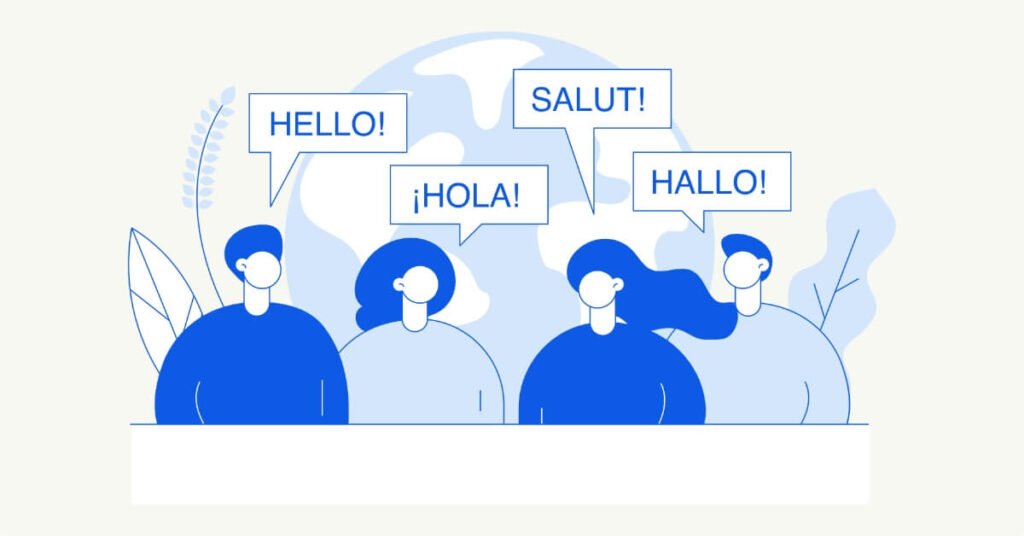
Morocco is naturally a multilingual country. On the streets, in businesses, and even online, people easily switch between Arabic and French, sometimes English, and in certain regions, Spanish is also present. A website that only speaks one language risks leaving part of its audience behind.
Here are the main reasons why a multilingual website has become essential in 2026:
Most Moroccan internet users navigate in French and Arabic. If your website exists in only one language, you automatically lose a portion of your potential visitors. A bilingual or trilingual site allows you to better reach your local market.
More and more Moroccan businesses work with foreign markets, in export, tourism, digital services, e-commerce… Offering an English version (and sometimes Spanish) gives a professional image and facilitates access to new markets.
Google favors websites that provide content tailored to each language. By following best practices (hreflang tags, separate URLs), a multilingual site can appear in search results in multiple countries, thereby increasing its visibility.
A website available in the visitor’s language inspires more confidence. It shows that the company has considered its clients and invests in the quality of their user experience.
Creating a website in multiple languages is an excellent strategic decision, but it is not as simple as adding a “Translate” button.
Without a structured approach, a multilingual project can quickly become complex to manage, expensive, and even harmful to your SEO.
Here are the main challenges to consider when building a multilingual website in Morocco:
Relying solely on automatic translation tools may be tempting, but in 2026, it remains a poor practice.
Poorly translated or approximate content damages your brand image and weakens your message.
It is strongly recommended to allocate a budget for professional translations or, at the very least, human proofreading adapted to the Moroccan context.
Each language version must provide the same level of user experience:
clear menus, smooth navigation, well-positioned buttons, and complete content.
Special attention must be given to the Arabic version, which is read from right to left (RTL) and requires specific design and layout adjustments.
A poorly configured multilingual website can generate duplicate content or be misinterpreted by Google.
It is essential to implement proper technical best practices:
hreflang tags, separate URLs for each language, a clear site structure, and dedicated sitemaps.
These elements are critical for strong multilingual SEO performance in 2026.
The more languages you add, the more demanding content management becomes.
Every update — blog posts, service pages, product listings — must be translated, reviewed, and kept up to date.
This requires strong organization, clear workflows, and sometimes the support of specialized tools or a professional web agency.
A well-translated multilingual website but poorly optimized may never be visible on Google. Fortunately, simple best practices exist to avoid common mistakes and ensure good visibility in each language.
These tags tell Google which language version to display based on the user’s language or country. For example: /fr for French speakers, /ar for Arabic speakers, /en for English speakers. Without hreflang, Google may show the wrong page to the wrong audience.
Avoid sites where only an automatic translation appears without a proper URL. Prefer a clear structure:
This facilitates indexing and content management.
Good multilingual SEO is not limited to word-for-word translation. You must adapt the vocabulary to local search habits. Example: an English-speaking user will search for “web design Morocco” rather than “creation website Morocco”.
Each version of the site should have its own XML sitemap so Google can properly crawl and index all content.
If two languages display the same text by mistake (e.g., an Arabic page remains in French), it can penalize the site. Always check that each version has unique content.
Creating a multilingual site is not just about good intentions; you also need the right tools. Depending on your CMS, budget, and goals, several options are available.
WordPress remains the most used CMS in Morocco. To manage multiple languages, two plugins dominate:
👉 Advantage: flexibility and compatibility with most themes and plugins.
If your site contains a lot of content (blog, e-commerce with hundreds of products), managing multiple languages can quickly become a headache. In this case, working with a web agency or multilingual expert ensures correct SEO setup and professional follow-up.
A multilingual website represents an additional investment compared to a standard site. Costs vary depending on project complexity, number of languages, and desired translation quality. Key elements to budget for include:
A standard single-language showcase website already costs between 5,000 and 15,000 MAD depending on features. Adding a second or third language can increase the budget by 20 to 40%, as you need to account for:
These fees are often unavoidable for professional management.
This is often the most significant item:
Creating a multilingual website is not just about adding translations. To make it efficient, attractive, and well-ranked, here are some concrete recommendations:
Before publishing, navigate through each language version of your site. Check:
Place the language selector in a visible location (top right or in the main menu). Use flags or clear abbreviations (FR / AR / EN) so visitors can easily find it.
Each language corresponds to a culture:
Every content update must be translated. A site where some pages are outdated in one language will lose credibility and may harm SEO.
These tips help maximize the impact of your multilingual website while avoiding common mistakes that can cost you traffic and clients.
Creating a multilingual website in Morocco in 2026 is no longer optional; it is a must-have strategy to reach a wider audience, improve your visibility, and gain credibility. Whether for the local or international market, a well-designed site in multiple languages can transform your online presence and boost your business.
Of course, this project requires preparation, choosing the right tools, high-quality translations, SEO optimization, and respecting the user experience… But with good organization and best practices, any business can successfully launch a multilingual site and gain a lasting competitive advantage.
Building a WordPress website in 2026 has never been easier. But choosing the right theme? That’s a completely different story. In Morocco, more and more entrepreneurs are launching their business websites, online ...
Bring your ideas to life with a modern, high-performing website designed around your goals.
At AzulWeb, we support you from the very first idea to the final launch.