
In 2026, attracting traffic to your website in Morocco is no longer enough. The real challenge is to turn visitors into customers. Whether you manage an online store, a corporate website, or a service-based platform, improving your website’s conversion rate in Morocco has become essential to sustainably profit from your marketing efforts.
A website can generate hundreds or even thousands of visits per month, but if only a small percentage of users take action (purchase, request a quote, sign up), that potential is wasted. The good news is that in 2026, there are practical and accessible ways to optimize the user experience, build trust, and increase online sales, without necessarily increasing your advertising budget.
In this practical guide, we’ll walk you step by step through how to analyze, understand, and improve your website’s conversion rate, using real-world examples and recommendations tailored to the Moroccan market.
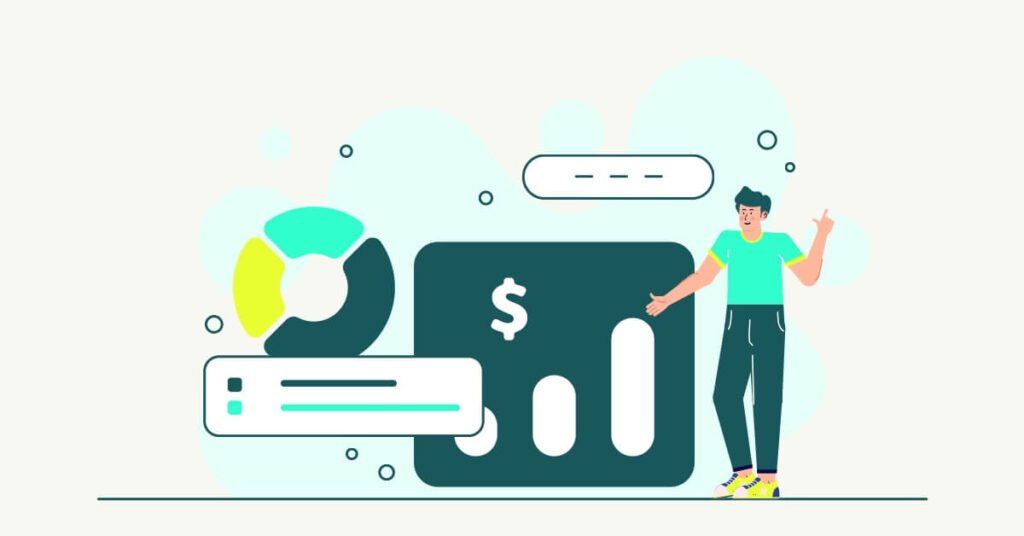
Digital marketing in Morocco has evolved significantly in recent years. Businesses are investing more than ever in online advertising, SEO, and social media.
Yet one recurring issue remains: many websites attract traffic but generate few sales.
That’s where the conversion rate comes in, a simple yet powerful metric.
Your conversion rate shows the percentage of visitors who take a meaningful action on your website: making a purchase, requesting a quote, subscribing to a newsletter, etc.
It’s essentially the true measure of your website’s effectiveness. No matter how many visitors you get, this number reveals whether your site actually convinces them, or not.
So when we talk about digital performance, it’s not just about bringing visitors in, it’s about turning them into customers.
Many Moroccan businesses make the same mistake: they judge their website’s success only by monthly traffic volume.
It looks impressive, but it’s misleading.
A website with 1,000 monthly visitors and a 5% conversion rate makes 50 sales.
Another site with 5,000 visitors but a 0.5% conversion rate only makes 25.
Result: the smaller site actually sells twice as much.
That’s proof that traffic without conversion is pointless.
A site built to convert works for you, even while you sleep.
Let’s make it concrete.
Imagine a Moroccan online store that attracts 10,000 visitors a month and has a 1% conversion rate.
That means it makes 100 sales.
If, with a better user experience and a few smart tweaks, that rate increases to 2%, sales instantly double to 200 orders — without spending a single extra dirham on ads.
That’s the power of conversion optimization: doing more with the same traffic.
And in a market where online competition is growing rapidly, this is often what makes the difference between a profitable website and one that stagnates.
Before trying to improve your results, it’s essential to measure them accurately.
In 2026, many businesses in Morocco invest in advertising or SEO but still don’t know how many visitors actually become customers.
Without reliable data, any optimization effort is based on assumptions.
Every website has different objectives, and your conversion goal depends directly on your business model:
👉 Before looking at numbers, it’s crucial to identify the most valuable action for your business.
This action will serve as the foundation for calculating your conversion rate.
Once your goals are defined, it’s time to use the right tools.
In 2026, conversion analysis solutions are more accessible, more accurate, and widely adopted—even by small businesses.
💡 Tip: even a Moroccan website with moderate traffic can generate actionable data within just a few days.
The key is to base decisions on real data, not assumptions.
The formula is straightforward:
Conversion rate (%) = (Number of conversions ÷ Total number of visitors) × 100
Let’s look at a concrete example:
Your e-commerce website receives 8,000 visitors per month, and 96 of them complete a purchase.
(96 ÷ 8,000) × 100 = 1.2%
Your conversion rate is therefore 1.2%.
This number is your starting point.
The goal is not to compare yourself to other websites, but to track your own performance month after month.
Even a small increase—such as 0.3%—can represent dozens of additional sales over the course of a year.
Once this tracking is in place, you’ll know exactly where to focus your efforts: slow pages, overly complex forms, lack of trust signals, and more. That’s what we’ll explore next.
Before you think about major redesigns, start with the easy wins — simple, often technical tweaks that can make an immediate difference.
These “quick wins” don’t require a developer or a big budget, but they remove silent blockers that cause visitors to leave without converting.
A slow site drives visitors away — and hurts your Google ranking.
In Morocco, where many users browse on mobile connections, speed is everything.
👉 A 1-second improvement in loading time can boost conversions by up to 7%.
For more details, check our full guide:
Optimizing Your Website Speed in Morocco in 2026: Complete Guide.
Over 70% of Moroccan internet users browse on their phones.
If your site isn’t fully responsive, you’re literally losing most of your audience.
💡 Pro tip: if you’re on WordPress, use a modern mobile-optimized theme like Astra, GeneratePress, or Kadence.
A broken link = a broken user experience.
404 errors instantly kill trust and disrupt the buying journey.
Example:
“Ooops, this page no longer exists. But maybe our most popular products might interest you?”
Even small issues can cost conversions. Fixing these details boosts both trust and SEO.
An unstable or infected website scares visitors away immediately.
Before working on design, make sure your technical foundation is solid.
👉 A fast, mobile-friendly, and secure site is the foundation of any conversion strategy.
These actions can all be done in just one day — and you’ll immediately see improvements in user experience.
Once your technical base is solid, you can move on to the next stage: shopping experience and persuasion.
Once your website is technically ready, it’s time to focus on what directly influences buying decisions: the content your visitors see.
Every page, whether it’s a product page, a service page, or a landing page, should be designed to reassure, persuade, and guide the user toward taking action.
A good product page isn’t just a pretty photo and a price. It’s a mini sales page.
It should tell a clear story and answer the questions your customer asks before buying.
Here’s a simple and effective structure:
💡 Pro tip: every product page should answer three simple questions, What is it? Why is it useful? Why buy it from you?
Landing pages are often overlooked, yet they’re at the core of your marketing campaigns.
A good landing page can turn a simple click into a real business opportunity.
👉 A successful landing page is fast, focused, and distraction-free.
The fewer exit paths there are, the more likely the visitor is to follow your intended journey.
CTAs are the most important, yet most underestimated — elements on a page.
A small tweak in wording, color, or placement can significantly increase your conversion rate.
Here are some best practices:
Real example:
On a Moroccan e-commerce site, changing the button from “Buy” to “Order Now – Pay on Delivery” increased sales by 18%, simply by removing a common fear.
A picture is worth a thousand words, but only if it builds trust.
Moroccan shoppers have become increasingly visually demanding: a poorly presented product instantly looks suspicious.
💡 Local tip: adapt visuals to the Moroccan audience, display prices in dirhams, include bilingual elements (FR/AR), and use locally familiar settings or clothing. It creates a more authentic connection.
At every click, your visitor is subconsciously asking: “Can I trust this site?”
You can answer that question before they even start doubting, simply by adding the right visual cues:
The goal is to remove hesitation before it kills the conversion.
A trustworthy site converts better, even without discounts.
Even after convincing the visitor, everything can still fall apart at checkout.
Studies show that over 60% of online carts are abandoned before payment — often due to a checkout process that’s too long, confusing, or untrustworthy.
Optimizing this final step is crucial to increase your revenue without needing more traffic.
Every unnecessary click costs you sales.
A smooth checkout should be fast, clear, and reassuring from start to finish.
Here are some powerful yet simple best practices:
UX tip: The more the user feels “almost done,” the more likely they are to complete the purchase.
One of the biggest causes of abandonment is the “bad surprise” at the end — hidden shipping fees, taxes, or unclear delivery times.
Be fully transparent from the start.
Transparency is your best defense against cart abandonment.
Payment is the moment of truth.
A site can lose up to 30% of its sales simply because it doesn’t offer the customer’s preferred payment method.
In Morocco, the most effective options are:
Ideally, offer at least two payment methods to maximize conversions.
And always display security logos (CMI, Visa, Mastercard) to build trust.
Even experienced shoppers can hesitate when entering their card details.
Your goal is to reassure them at every click:
Real example:
A simple message like “You can check your order upon delivery before payment” reduced checkout abandonment by over 20% for Moroccan e-commerce stores.
Even with a perfect checkout, some customers will still leave before paying.
But that doesn’t mean they’re lost, smart follow-ups can bring many of them back.
Here’s how:
If your store runs on Shopify, WooCommerce, or PrestaShop, there are simple plugins to automate these reminders.
The customer experience doesn’t end at checkout.
A clear confirmation and transparent follow-up strengthen trust — and set the stage for the next purchase.
A well-handled post-purchase experience turns first-time buyers into loyal customers, and loyal customers into your best ambassadors.
Even with a smooth checkout and a beautiful design, your website won’t convert if it doesn’t inspire trust.
In Morocco, many internet users still hesitate to enter their card details or place an online order, especially on a site they’re discovering for the first time.
Your mission: create a climate of trust at every step of the customer journey.
Nothing builds credibility like social proof. Moroccan customers trust other buyers’ experiences far more than a brand’s own claims.
💡 Tip: Add a “What Our Clients Say” section on your homepage or key service pages.
A well-written guarantee removes the last bit of hesitation. The customer needs to know exactly what’s at stake, or rather, that there’s no risk at all.
👉 Transparency = Trust = Conversion.
Moroccan shoppers like to know who they’re buying from. Humanizing your brand creates an instant emotional connection.
💬 A short personal note from the founder (“Thank you for your trust — The X Team”) might seem small, but it has a powerful psychological effect.
A trustworthy website always provides multiple visible contact options. A phone number or physical address in Casablanca, Rabat, or Marrakech often makes all the difference.
💡 Bonus: Embed a Google Maps location in your contact section, it’s a strong credibility signal.
Content is one of the best ways to build trust. A website that shares advice proves its expertise and naturally attracts more qualified visitors.
🧠 SEO tip: Quality content not only boosts your Google rankings but also strengthens your brand’s authority.
The way your site looks directly affects how much users trust it. A clean, modern, and consistent design conveys quality, even before the visitor reads a single word.
💬 A well-presented website = a professional brand = a confident customer.
Optimizing your conversion rate isn’t just about design or technical tweaks. It’s above all about trust, clarity, and experience. By applying these strategies step by step, from site speed to payment transparency, you’ll turn your Moroccan website into a sustainable conversion engine.
Artificial intelligence in Morocco is no longer a technology reserved for large corporations or multinationals. In 2026, it has become a real growth driver for SMEs, e-commerce businesses, and Moroccan entrepreneurs who ...
Bring your ideas to life with a modern, high-performing website designed around your goals.
At AzulWeb, we support you from the very first idea to the final launch.