
Accepting online payments has become essential for any Moroccan business selling on the internet. Whether you run an e-commerce store, offer online services, or simply want to give your customers more flexibility, the ability to pay by card or mobile is now a real growth driver. In 2026, Moroccan consumers are fully accustomed to digital payments, and businesses that fail to adapt risk losing sales to more agile competitors.
However, between Moroccan banks, CMI, local fintech companies, and international payment solutions, it is easy to feel overwhelmed. Is going through CMI mandatory? Can you use PayPal or Stripe from Morocco? What are the real fees, payout delays, and regulatory constraints? This comprehensive guide breaks down everything you need to know to accept online payments in Morocco in a simple, secure, and locally compliant way.
We will review the different payment solutions available in 2026, their advantages and limitations, as well as the concrete steps required to integrate them into your website or online store. The goal is to help you choose the payment solution best suited to your business, reduce friction at checkout, and deliver a smooth payment experience for your customers, both on desktop and mobile.
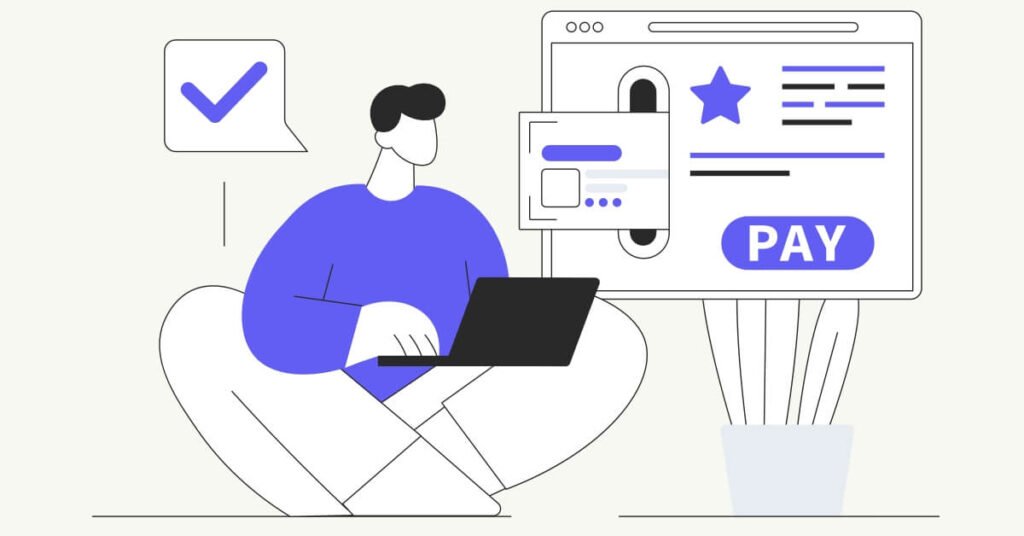
Morocco has come a long way in online payments over the past few years. Where once only a few large companies could accept bank cards online, there are now numerous local and international solutions suitable for all types of businesses: retailers, startups, freelancers, associations, or full e-commerce stores.
Let’s explore the main payment options available in Morocco in 2026, along with their advantages, limitations, and practical use cases.
The most well-known solution remains the CMI (Interbank Monetic Center), the official partner of most Moroccan banks. It’s the “classic” gateway that allows you to accept payments via Moroccan bank cards (CMI, Visa, Mastercard) directly on your website.
CMI is reliable, widely recognized, and compliant with Moroccan regulations. However, integration can sometimes be a bit technical, and administrative steps (merchant account setup, contract, documentation) may take a few days.
👉 Ideal for: established e-commerce stores, legally registered businesses in Morocco, or shops with regular sales volume.
👉 Note: some Moroccan hosting providers and web agencies offer turnkey support for integrating CMI on WooCommerce, Prestashop, or Shopify.
Mobile payment solutions are growing rapidly. Services like Inwi Money, Orange Money, CIH Pay, and WafaCash allow customers to pay directly from their phones without needing a bank card.
In 2026, more and more local platforms are integrating these options to reach a wider audience, especially unbanked users.
👉 Ideal for: businesses targeting young people, areas with low banking penetration, or local marketplaces.
👉 Advantage: fast payments, mobile verification, and high acceptance rates.
Some international solutions are partially available in Morocco.
PayPal allows sending and receiving payments but has limitations when withdrawing to Moroccan bank accounts.
Stripe, very popular globally, is not yet officially available for Moroccan companies unless they register a foreign entity (e.g., a European subsidiary).
Payoneer is a good alternative for freelancers and service exporters, enabling them to receive international payments in multiple currencies (USD, EUR, GBP, etc.).
👉 Ideal for: freelancers, agencies, or businesses selling internationally.
👉 Note: these services may require a foreign legal entity or specific tax arrangements.
For some businesses, especially at the start, simpler solutions like direct bank transfers or cash on delivery (COD) are possible.
COD remains very popular in Morocco, especially for physical products. However, it carries risks of refusal or returns and requires suitable logistics.
👉 Ideal for: beginner online shops or sales via social media (Facebook, Instagram, WhatsApp).
👉 Limitation: the payment process is not fully automated.
In summary, the choice of payment solution depends on your business type, audience, and goals. Gateways like CMI provide professional integration, while mobile wallets allow you to reach a broader market. International solutions like Payoneer or PayPal are useful for exports but are only partially available.
The key is to choose an option that combines reliability, security, and simplicity for your Moroccan customers.
Not all payment solutions are equal. Some are easier to set up, others more complete but costlier. Before signing a contract or integrating a gateway, it’s essential to compare several criteria to find the one that truly fits your business, sales volume, and customers.
Here are the main factors to consider before making your choice 👇
This is often the first criterion to check. Each provider applies different commissions depending on the card type (CMI, Visa, Mastercard), sales volume, or payment method (domestic or international).
Some solutions also charge setup fees, monthly maintenance, or bank transfer fees.
Always ask:
A slightly higher rate may be worth it if the service is faster or integration is smoother.
Whether you manage your site yourself or work with an agency, technical integration is crucial.
Some Moroccan solutions like CMI or CIH Pay provide ready-to-use plugins for WooCommerce, Prestashop, or Shopify. Others require custom development via API.
👉 Before choosing, check the technical documentation, availability of a sandbox environment, and developer support.
Not all your customers use the same payment methods. To maximize sales, pick a solution that supports multiple options:
The more options you offer, the higher your conversion rate — especially on mobile.
Some gateways transfer funds within 24–48 hours, others take several days.
If cash flow is sensitive, prioritize a solution with short and transparent payout times. Local fintechs are improving here, but traditional banks can still be slower.
Never underestimate security. Ensure your provider complies with PCI-DSS, uses 3D Secure, and encrypts data via HTTPS.
Also, consider CNDP compliance for protecting Moroccan customers’ personal data.
A certified solution builds trust and reduces fraud and chargeback risks.
Nothing is more frustrating than a blocked payment on a Friday night with no support.
Always check the availability of customer service (hours, channels, responsiveness) and the provider’s reputation in the Moroccan market.
A slightly more expensive solution with responsive support can make a huge difference day to day.
E-commerce stores, freelancers, and associations all have different needs.
In short, the best solution is the one that fits your business model and customer base.
💡 Practical Tip:
Before committing, test the solution for a few days with a small volume of transactions. You’ll quickly see if it’s stable, easy to use, and provides clear reporting.
This is the best way to avoid surprises and ensure a smooth experience for your Moroccan customers.
Now that you know the main available solutions, let’s get practical.
Here are the steps to securely accept online payments in Morocco, whether you have a WooCommerce store, a showcase website, or a service platform.
First, you need to know that payment providers require certain guarantees.
Businesses must be legally registered in Morocco (auto-entrepreneur, SARL, SA, etc.) and have:
Some local fintechs are more flexible and also accept freelancers or independent professionals.
In any case, having a clear legal status speeds up the approval process.
This is the central step.
Depending on the solution you choose (CMI, CIH Pay, WafaCash, Payoneer, etc.), you will need to complete an online form and provide your legal documents.
Once your application is approved, you will receive your merchant credentials and technical information needed for integration.
👉 Tip: Some Moroccan banks (CIH, Attijariwafa Bank, BMCE, etc.) can directly assist with opening a CMI account, which simplifies the process.
There are two main approaches:
👉 Example: On WordPress, the “CMI Payment Gateway for WooCommerce” plugin connects your store in just a few clicks.
Before launching real payments, always test your integration in the sandbox environment.
Check that:
A test transaction will save you many problems after going live.
Once tests are successful, activate “production” mode and start accepting real payments.
Monitor initial transactions carefully:
👉 Regular monitoring helps detect issues, optimize your checkout flow, and improve conversion rates.
A good payment flow goes beyond technology.
Add to your site:
These elements reassure customers and increase conversion.
A confident customer is much more likely to complete their purchase.
By following these steps, you can set up a professional payment system in Morocco in just a few days. The most important thing is to choose a reliable partner, test before launch, and ensure a smooth, secure experience for every transaction.
Once your merchant account is active, it’s time to connect your website to your payment solution.
Depending on your platform — WordPress, Prestashop, Shopify, or a custom site — there are several ways to integrate a payment gateway.
The choice depends on your technical skill, budget, and the level of customization you want to offer your customers.
WooCommerce is the most widely used e-commerce solution in Morocco.
Good news: CMI and several local banks already provide official or third-party plugins that are compatible.
👉 General steps:
Within minutes, your WooCommerce store can securely accept Moroccan bank card payments.
💡 Tip: If working with a web agency, ask them to customize the checkout page to match your site’s visual identity.
Prestashop is also popular among Moroccan e-merchants.
CMI and other local providers offer official modules compatible with Prestashop 1.7 and 8.x.
Installation is done via the admin interface (“Modules > Payment”) by importing the provided ZIP file.
Once configured, you can:
👉 Ideal for medium to large online stores.
Shopify doesn’t yet have a native CMI gateway, but alternative solutions exist through Moroccan integrators.
Some offer “Shopify Custom Payment Gateway” apps that redirect customers to the CMI payment page and return them to the store after validation.
👉 If using Shopify for a Moroccan site, ensure compatibility with dirhams (MAD) and check for potential conversion fees.
For international sales, Shopify Payments (Stripe-based) is not yet available for Morocco-registered businesses, though some agencies provide legal workarounds (subsidiaries, European entities).
For developers or more complex platforms (marketplaces, SaaS, booking portals), REST API integration is the most flexible.
It allows you to:
Major Moroccan providers (CMI, CIH Pay, WafaCash, etc.) provide complete API documentation with examples in PHP, Python, or Node.js.
👉 Simplified API flow example:
💡 Tip: Always start with the sandbox environment, then switch to production after testing.
Before opening payments to the public, ensure:
These checks ensure a smooth experience and prevent transaction errors.
Even after going live, regular monitoring is essential.
Update your payment plugins, check error logs, and keep an eye on CMS version changes (WooCommerce, Prestashop, etc.).
In case of bugs, your provider’s technical support (or web agency) can quickly resolve issues.
A well-configured, secure, and tested integration is the key to smooth payments and maximum conversion.
It also sends a strong trust signal to Moroccan customers — they know they’re buying from a professional, reliable site.
Accepting online payments is one thing — securing them is even better.
In Morocco, customer trust is a key factor for successful online sales.
A single security mistake can damage your reputation and drive buyers away.
Fortunately, modern Moroccan solutions (like CMI) already comply with the strictest international standards.
But as a website owner, you also need to do your part.
The PCI-DSS (Payment Card Industry Data Security Standard) defines global best practices for protecting cardholder data.
Good news: Moroccan gateways like CMI and CIH Pay are already PCI-DSS certified.
👉 This means you don’t need to store card information on your server yourself (doing so would be illegal and risky).
Your responsibilities include:
For several years, most online transactions in Morocco have gone through the 3D Secure system.
This triggers the verification step via SMS or bank notification.
It significantly reduces fraud and protects both merchants and customers.
💡 Tip: Display “3D Secure Secure Payment” on your checkout page or in the footer of your site.
It’s a small detail that instantly builds visitor trust.
An e-commerce site without HTTPS is unthinkable today.
This protocol encrypts data between the customer and your server, preventing interception.
Browsers will show a “Not Secure” warning if your SSL certificate is missing.
👉 To get an SSL certificate:
Proper HTTPS also improves your Google SEO ranking, as security is an official ranking factor.
The National Commission for the Protection of Personal Data (CNDP) ensures Moroccan sites protect user personal information.
If your site collects data (name, email, address, etc.), you must:
This demonstrates seriousness and legal compliance, especially when processing online payments.
Even with a secure gateway, a vulnerable site remains a risk.
Follow these best practices:
💡 Bonus tip: Regularly test your site with a free security tool like Qualys SSL Labs to check the strength of your SSL certificate.
A few simple steps can save you a lot of trouble:
The clearer and more documented your process, the easier it will be to handle potential disputes.
A secure infrastructure, certified gateways, and a solid data protection policy, these are the three pillars of reliable online payments in Morocco. It also signals professionalism and serves as a strong marketing point to reassure your customers from their very first visit.
Even with a reliable and secure payment gateway, the success of an e-commerce website largely depends on one key factor: visitor trust.
In 2026, Moroccan users remain cautious when entering their banking details on a website they are discovering for the first time.
Your objective is therefore clear: reassure them at every step of the purchasing journey.
Here are the best practices to convert more visitors into customers in Morocco in 2026 👇
These are simple visual elements, but they are extremely effective.
Logos such as “CMI”, “Visa”, “Mastercard”, “3D Secure”, “Secure Payment”, or “HTTPS” are instantly recognizable and reassuring.
👉 Place them strategically:
💡 Tip: use only official, high-quality logos in color to avoid any unprofessional appearance.
In Morocco, word of mouth and social proof play a major role in purchasing decisions.
Authentic customer reviews significantly increase trust among new visitors.
You can:
👉 If you use WooCommerce, plugins like “Customer Reviews for WooCommerce” can automate review collection after each order.
This is a strong signal of professionalism and transparency.
A business that clearly displays its legal information naturally inspires confidence.
Make sure to include:
💡 Tip: add links to these pages in the footer so they are visible on every page.
Every unnecessary step increases the risk of cart abandonment.
An effective checkout should be fast, clear, and reassuring.
Best practices include:
👉 In 2026, Moroccan websites that optimize their checkout often see conversion rate increases between 15% and 30%.
Most online payments in Morocco are now made via smartphone.
A website that is not mobile-optimized directly loses revenue.
Make sure that:
💡 Tip: regularly test your website using Google’s free “Mobile Friendly Test” tool.
A visitor who can quickly get an answer is far more likely to complete a purchase.
Clearly display your contact channels: WhatsApp Business, live chat, email, or phone.
Respond quickly to questions about payment methods, delivery times, or returns.
👉 Responsive pre-purchase support can increase conversion rates by 20% to 40%.
Do not wait for doubts to arise.
Display simple, visible messages such as:
“100% secure payment via CMI and HTTPS protocol”
“Your banking data is encrypted and fully protected”
Even short messages like these reassure visitors and strengthen your site’s credibility.
A website that inspires trust is a website that sells.
By applying these best practices, you will reduce cart abandonment, improve customer experience, and indirectly strengthen your search engine visibility.
In 2026, Morocco is experiencing a real acceleration in e-commerce. Consumers are ready, the technology is mature, and local solutions like CMI or CIH Pay now allow any business, small or large, to collect payments online safely and efficiently.
Whether you’re a retailer, service provider, or content creator, setting up a reliable online payment system is a must-have step to grow your digital business.
👉 In short:
Accepting online payments isn’t just about technology, it’s about trust, customer experience, and credibility. The smoother and more reassuring your checkout process is, the more your visitors will feel confident to complete their purchase.
Our team can guide you step by step to: Choose the best payment solution for your business. Set up your online store. Secure your transactions and boost your conversion rate.
Bring your ideas to life with a modern, high-performing website designed around your goals.
At AzulWeb, we support you from the very first idea to the final launch.